The trajectory of any national football team is profoundly shaped by the individuals who lead it. For the Atlas Lions, the Morocco national team, this journey represents a rich tapestry woven through the strategies, decisions, and leadership of numerous coaches. Understanding the Morocco national team coach history offers fascinating insight into the evolution of Moroccan football, from its early development to its emergence as a global contender. Each coach, with their unique philosophy and approach, has left a distinctive mark, contributing to the team’s identity, successes, and periods of challenge. This article explores the legacy of these influential figures and their impact on the team and the nation’s footballing narrative, forming a crucial part of the broader discussion on the Morocco National Team Coaching Staff and Management.
From early pioneers who established the groundwork to modern tacticians who have guided the team to international acclaim, the role of Morocco’s head coach has always been pivotal. Their leadership extends beyond the pitch, influencing player development, tactical approaches, and team spirit. This examination traces this remarkable lineage, highlighting key periods and the coaches who defined them.
The Genesis: Early Morocco National Team Coach History (1950s-1970s)
The early years of Moroccan football were characterized by a quest for identity and structure following the nation’s independence. The first coaches faced the monumental task of building a cohesive national team from scratch, often with limited resources but boundless passion. These pioneers established the foundational principles upon which Moroccan football would develop.
Laying the Foundation: Robert Zanger and the First Steps
Robert Zanger was appointed as the first coach for independent Morocco in 1957. His tenure, though brief, marked the official beginning of the national team’s competitive journey. Zanger, alongside subsequent early coaches like Kaddour and Larbi Ben Barek (a legendary Moroccan player who also took on coaching responsibilities), focused on organizing the team and preparing them for their initial international fixtures. These foundational years emphasized participation and gaining experience on the global stage.
Building Momentum: The 1970s and the AFCON Triumph
The 1970s brought significant growth for the Atlas Lions. Under coaches such as Abdellah Blinda and later the legendary Romanian manager Gheorghe Mărdărescu, Morocco began asserting itself on the African continent. Mărdărescu is particularly remembered for leading Morocco to its first and only Africa Cup of Nations title in 1976, a historic moment in the Morocco national team coach history. This monumental achievement demonstrated the potential of Moroccan football and solidified its status among Africa’s elite. His tactical acumen and ability to foster team spirit proved crucial to this success.

The Golden Era: World Cup Breakthroughs (1980s-1990s)
The 1980s and 1990s represent a golden age for Moroccan football, marked by historic World Cup qualifications and memorable performances. This period featured coaches who not only achieved significant results but also instilled confidence and ambition within the squad.
José Faria and Mexico ’86: A Tactical Masterclass
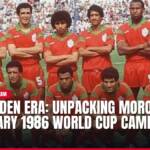
Among the most revered figures in Morocco national team coach history stands Brazilian José Faria. Appointed in 1983, Faria revolutionized the team’s approach, blending tactical discipline with flair. He famously led Morocco to the 1986 FIFA World Cup in Mexico, where they made history by becoming the first African nation to reach the second round. His team topped a group featuring England, Portugal, and Poland, a testament to his strategic brilliance and the players’ execution. Faria’s legacy rests on his innovative tactics and ability to unlock the potential of Moroccan players, establishing a new benchmark for African football.
Henri Michel and France ’98: Consistency and Flair
Following Faria’s impactful tenure, several coaches including António José da Cunha and Werner Olk managed the team. The late 1990s saw the arrival of Frenchman Henri Michel, who ushered in another period of distinction. Michel assembled a talented squad featuring stars like Mustapha Hadji and Salaheddine Bassir, guiding Morocco to the 1998 FIFA World Cup in France. Though they narrowly missed the knockout stages despite strong performances, his team played with an attractive, attacking style that captivated fans. His ability to blend European professionalism with Moroccan talent left a lasting impression on the nation’s footballing identity.

Periods of Fluctuation: Challenges and Resilience (2000s-Early 2010s)
The turn of the millennium brought mixed fortunes for the Morocco national team. While flashes of brilliance emerged, the team often struggled with consistency, experiencing numerous coaching changes and near misses in major tournaments. This era highlights the unique challenges faced by Morocco’s coaching position.
The Return of Badou Zaki: AFCON 2004 Finalists
Badou Zaki, one of Morocco’s most iconic goalkeepers, took the helm in 2002. His tenure is best remembered for leading the Atlas Lions to the 2004 Africa Cup of Nations final in Tunisia. Despite losing to the host nation, Zaki’s team displayed passion and determination, rekindling hope among supporters. His deep understanding of Moroccan football, gained through his celebrated playing career, enabled him to connect with the squad and inspire strong performances. Zaki’s journey as both player and coach underscores his significant contribution to the Morocco national team coach history.
A Carousel of Coaches: Seeking Stability
Following Zaki’s departure in 2005, the team entered a phase of frequent coaching transitions. Philippe Troussier, Roger Lemerre, and Henri Michel (for a second stint) all attempted to stabilize the team. While these coaches brought international experience, the squad struggled to achieve consistent success, often failing to qualify for major tournaments or exiting early. This period demonstrates how coaching changes can impact the team’s performance, as frequent shifts often hinder long-term planning and squad cohesion.
Eric Gerets and the Search for Identity
Belgian coach Eric Gerets, known for his club-level success, was appointed in 2010 with considerable expectations. Despite commanding a strong squad, his tenure yielded largely disappointing results, particularly in African Cup of Nations competitions. His time highlighted the challenges in integrating foreign tactical philosophies with the specific dynamics of a national team, alongside the constant tension between fan expectations and reality.
The Modern Era: Towards Global Competitiveness (Mid-2010s-Present)
The mid-2010s marked renewed focus on professionalism and strategic development, leading to a resurgence in Moroccan football. This era has seen coaches who successfully blend international experience with deep understanding of Moroccan football culture, propelling the team back onto the global stage.
Hervé Renard: Resurgence and Russia 2018
Frenchman Hervé Renard, known for his Africa Cup of Nations successes with Zambia and Ivory Coast, took charge in 2016. Renard brought disciplined methodology and a winning mentality. He successfully guided Morocco to the 2018 FIFA World Cup in Russia, ending a 20-year absence from the tournament. Under his leadership, the team played with tactical solidity and fierce determination. Renard’s influence extended beyond results to instilling strong professional standards, making him a significant figure in recent Morocco national team coach history.

Vahid Halilhodžić: Navigating Challenges
Following Renard’s departure, Bosnian coach Vahid Halilhodžić was appointed. His tenure featured strong qualification campaigns for the 2021 Africa Cup of Nations and the 2022 FIFA World Cup. However, despite achieving qualification, his conservative tactics and publicized disagreements with key players created significant tension. His period highlighted the delicate balance coaches must strike between results, team harmony, and public perception, generating scrutiny over the selection criteria for Morocco’s head coach.
Walid Regragui: The Architect of Qatar 2022 History
In a dramatic turn just months before the 2022 FIFA World Cup, former Moroccan international Walid Regragui was appointed. A successful club coach in Morocco with national team experience as a player, Regragui quickly unified the squad and implemented a pragmatic yet effective tactical system. He led the Atlas Lions to an unprecedented semi-final run, making them the first African and Arab nation to achieve this feat. His leadership, tactical prowess, and ability to foster exceptional team spirit have established him as a legendary figure in Morocco national team coach history. His achievement reflects the potential of local talent and deep understanding of the team’s unique strengths, demonstrating tactical expertise in the current Morocco national team’s strategy. His success also provides insight into how Morocco’s coaching compares to other African managers.
Impact and Legacy: Shaping Moroccan Football
The collective efforts of these coaches have profoundly shaped Moroccan football’s landscape. Their contributions extend beyond results, influencing player development, tactical evolution, and the national team’s standing on the world stage.
Developing Talent and Tactical Evolution
From early emphasis on physical conditioning to modern focus on tactical flexibility and technical skill, each coach has contributed to Moroccan player development. Faria and Regragui, in particular, demonstrated how to harness Moroccan footballers’ inherent talent and integrate them into effective team structures. Their work illustrates how coaching influences youth development, often setting standards that extend through the national football system.
Building National Identity and Pride
Successes achieved under various coaches, particularly World Cup qualifications and the historic Qatar 2022 run, have deeply resonated with the Moroccan people. These triumphs have fostered strong national pride and unity, with the team serving as a powerful symbol of national aspirations. Coaches therefore carry significant responsibility beyond wins and losses; they are custodians of a nation’s hopes.
The Enduring Role of Leadership
The Morocco national team coach history demonstrates the enduring importance of strong leadership. Whether foreign or local, these individuals have navigated immense pressure, high expectations, and complex dynamics. Their stories are integral to understanding not just football, but the broader cultural and social narrative of Morocco. The head coach’s role is enhanced by the crucial contributions of others, as explored in the vital role of assistant coaches in the Morocco national team.
The journey through Morocco’s coaching lineage reveals a continuous pursuit of excellence, punctuated by moments of triumph and periods of rebuilding. Each coach has added a unique chapter to this ongoing narrative, enriching the legacy of Moroccan football. From foundational years to recent historic achievements, coaches have been the guiding force shaping the Atlas Lions’ destiny. As the team looks forward, lessons from this coaching heritage will continue to influence its path, under the guidance of the current Morocco national team coach, sustaining the proud tradition of the Morocco National Team Coaching Staff and Management.
FAQ Section
Who was the first official Morocco national team coach?
Robert Zanger was appointed as the first official coach for independent Morocco in 1957. He established the initial groundwork for the team’s competitive participation on the international stage.
Which coach led Morocco to its only Africa Cup of Nations title?
Romanian coach Gheorghe Mărdărescu led Morocco to its first and only Africa Cup of Nations title in 1976. This remains a historic achievement in the nation’s footballing history.
Who was the coach when Morocco became the first African team to reach the second round of a FIFA World Cup?
Brazilian coach José Faria was at the helm when Morocco made history at the 1986 FIFA World Cup in Mexico, becoming the first African nation to advance past the group stage by topping a challenging group.
Which coach guided Morocco to the semi-finals of the 2022 FIFA World Cup?
Walid Regragui, a former Moroccan international, achieved this unprecedented feat at the 2022 FIFA World Cup in Qatar, leading the Atlas Lions to the semi-finals and making them the first African and Arab nation to reach that stage.
How many times has Badou Zaki coached the Morocco national team?
Badou Zaki, a legendary Moroccan goalkeeper, has held two notable stints as head coach. His most notable period saw him lead the team to the 2004 Africa Cup of Nations final.