
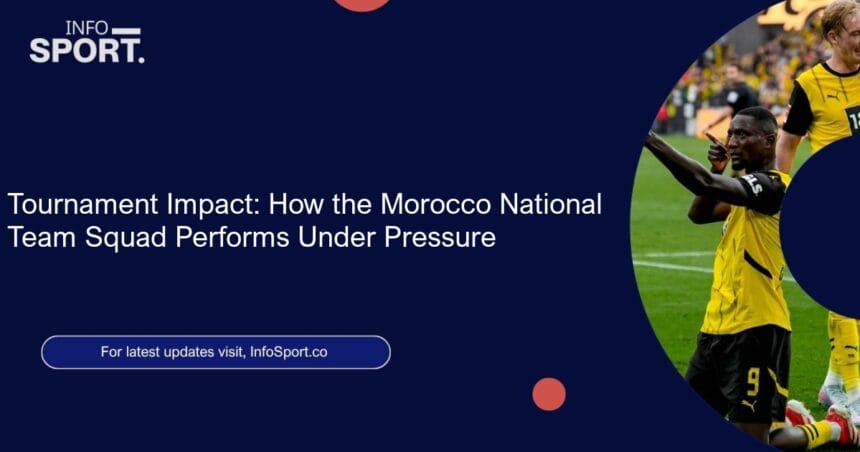
Tournament Impact: How the Morocco National Team Squad Performs Under Pressure
International football is a stage where skill, strategy, and determination converge. Few elements prove as critical to success as a team’s ability to perform when stakes are highest. The Morocco national team squad has faced this test repeatedly, most notably during their historic 2022 FIFA World Cup campaign. This article examines how the Atlas Lions navigate the intense scrutiny, mounting expectations, and physical demands of elite competition, revealing their mental resilience and tactical sophistication.
Understanding how this squad performs under pressure requires examining their key players, coaching philosophy, and historical trajectory. Their journey reflects a pattern of resilience—punctuated by moments of brilliance and hard-won lessons from setbacks. The capacity to elevate performance when the global spotlight shines brightest defines truly exceptional teams.
The Crucible of Competition: Understanding Tournament Pressure
Tournament pressure operates as a unique force in sports. It encompasses the weight of national expectations, the finality of knockout stages, and the unforgiving scrutiny of global audiences. For national teams, every action carries amplified significance, with millions of supporters watching intently.
Defining Pressure in International Football
International pressure stems from multiple sources: intense fan expectations, relentless media attention, career-defining moments, and the irreversibility of single-elimination formats. Unlike league competitions, there exists minimal margin for error; one poor showing can end a tournament dream. Such environments demand not merely technical ability but exceptional composure and mental strength.
The Weight of Expectation for Morocco
The Morocco national team squad has faced escalating expectations, particularly following their World Cup achievement. As a leading African footballing nation, they consistently aspire to perform on continental and global stages. This pressure cuts both ways—it fuels ambition yet complicates focus and execution during intense matches.

Morocco’s Historic World Cup 2022 Journey: A Case Study in Resilience
The 2022 FIFA World Cup in Qatar stands as definitive proof of the Morocco national team squad‘s ability to excel when pressure peaks. Their semi-final run represented more than successive victories; it showcased masterful mental toughness and tactical precision against elite opponents.
Group Stage Triumphs: Overcoming Giants
Drawn into Group F alongside Belgium, Croatia, and Canada—all formidable competitors—Morocco faced early skepticism from analysts predicting swift elimination. Under Coach Walid Regragui, the Atlas Lions defied these predictions. They earned a hard-fought draw against Croatia, followed by a remarkable 2-0 triumph over the star-laden Belgian team. Their convincing 2-1 victory against Canada secured first place, establishing their tournament credentials immediately.
Knockout Stage Brilliance: Defying the Odds
The elimination rounds presented heightened challenges. Against Spain in the Round of 16, Morocco endured 120 goalless minutes before goalkeeper Yassine Bounou proved decisive in the penalty shootout. Next came a momentous quarter-final clash with Portugal, where a resolute defensive performance and Youssef En-Nesyri’s powerful header secured a historic 1-0 victory, making them the first African and Arab nation to reach a World Cup semi-final.

Key Players Under Pressure: Who Stepped Up?
Several Morocco national team squad members distinguished themselves through composure and decisive contributions during the tournament.
- Yassine Bounou (Bono): The goalkeeper delivered crucial saves and excelled in penalty situations, his calm presence reassuring teammates. For more on his role, see Analyzing Morocco National Team’s Goalkeepers.
- Sofyan Amrabat: Operating as a tireless defensive midfielder, he disrupted opposition play and provided stalwart defensive cover with remarkable intensity.
- Achraf Hakimi: The attacking full-back balanced defensive responsibility with dangerous forward runs, including a memorable penalty conversion against Spain.
- Hakim Ziyech: Despite initial questions, Ziyech embraced his role effectively, delivering creative moments and decisive leadership from the wing.
- Romain Saïss: The captain led defensively with experience and determination, playing through injury to anchor the backline. Explore the defensive unit further in Meet the Defenders of the Morocco National Team Squad.
Tactical Acumen in High-Stakes Matches
Coach Regragui’s strategic approach proved essential. Morocco employed a disciplined defensive framework, typically absorbing pressure before launching rapid counter-attacks. This system, executed with precision by the squad, frustrated opponents and created crucial scoring opportunities. Their capacity to maintain shape amid relentless assault proved fundamental to their tournament success.
Analyzing Key Players’ Performance Under Duress
Individual excellence within the Morocco national team squad frequently emerges during high-pressure situations. Their capacity to deliver when circumstances demand represents a hallmark of their collective strength.
Goalkeepers: The Last Line of Defense
Yassine Bounou exemplified poise under extreme pressure. His saves against Spain and Portugal proved both technically proficient and psychologically vital for the team. His assured presence allowed outfield players to concentrate fully on their responsibilities. This critical position receives further examination in Analyzing Morocco National Team’s Goalkeepers.
Defenders: Resolute and Commanding
The defensive unit—comprising Romain Saïss, Achraf Hakimi, Nayef Aguerd, and Noussair Mazraoui—formed an impenetrable barrier. Their coordination, positional awareness, and physical commitment exemplified defensive excellence. They confronted elite attackers with tactical intelligence and composure.
Midfield Maestros: Controlling the Engine Room
Sofyan Amrabat’s tireless work-rate and ball-winning prowess proved pivotal. Supported by Azzedine Ounahi’s technical elegance and Selim Amallah’s dynamic energy, the midfield disrupted opponents’ attacking flows while initiating swift transitions. Their ability to maintain dominance centrally—even against technically superior opposition—proved instrumental. Learn more in Midfield Maestros of the Morocco National Team Squad.

Forwards: Clinical in Critical Moments
While frequently deployed defensively, the attacking players of the Morocco national team squad—particularly Hakim Ziyech and Youssef En-Nesyri—delivered vital attacking moments. En-Nesyri’s header against Portugal demonstrated finishing composure. Ziyech’s ability to create openings and challenge defenders provided essential offensive balance. For detailed analysis of their attacking contributions, refer to Goal Scorers and Attackers: The Forwards of the Morocco National Team Squad.
The Role of Coaching and Team Cohesion
Beyond individual performances, the leadership and unity characterizing the Morocco national team squad proved fundamental to their pressure-situation success.
Walid Regragui’s Leadership and Mental Fortitude
Coach Walid Regragui, appointed mere months before the World Cup, rapidly cultivated belief and mental resilience. His “Dima Maghrib” (Morocco Forever) philosophy fostered collective identity and shared purpose. He effectively managed external pressures, insulated players from distractions, and empowered them to perform fearlessly. His tactical vision is elaborated in Coach Regragui’s Vision: Decoding the Morocco National Team’s Preferred Starting XI.
The Power of Team Spirit and Unity
The camaraderie evident within the Morocco national team squad was palpable throughout their tournament run. Players demonstrated unwavering support for one another, unified in purpose. This strong cohesion acted as a buffer against mounting pressure, enabling mutual encouragement and collective resilience.
Adapting Tactics Under Pressure
Regragui’s in-game tactical flexibility proved decisive. Whether adjusting formations, executing timely substitutions, or reinforcing defensive organization, the team responded effectively. This tactical adaptability, combined with player understanding and execution, allowed them to neutralize opponents’ advantages and exploit vulnerabilities—even under extreme duress.
Beyond Qatar: Performance in Other Major Tournaments
While the 2022 World Cup represented a pinnacle, the Morocco national team squad has competed in numerous major tournaments, each presenting distinct pressures and developmental opportunities.
Africa Cup of Nations (AFCON) Challenges
The Africa Cup of Nations presents distinctive obstacles—from varying playing surfaces to intense regional rivalries. Morocco has frequently emerged as a strong contender, though hasn’t consistently translated potential into ultimate triumph. These tournaments provide essential testing grounds for experiencing high-stakes competition and developing mental resilience. AFCON experiences directly inform the squad’s continuing evolution.
Learning from Setbacks and Building for the Future
Every tournament—successful or otherwise—offers valuable experience. The Morocco national team squad demonstrates consistent capacity to extract lessons from disappointments and refine their approach for subsequent competitions. This commitment to continuous improvement remains essential for maintaining their standing among elite footballing nations. For current squad details, see Morocco National Team Squad 2024: Full Player List and Analysis.
The Future of the Morocco National Team Squad Under Pressure
The 2022 World Cup legacy established elevated benchmarks for the Morocco national team squad. Sustaining this performance level amid heightened expectations represents the current challenge.
Nurturing Young Talents for High-Stakes Games
Integrating emerging talents into the senior squad remains vital for sustained success. Exposing promising players to high-pressure environments—through competitive matches and qualifier rounds—prepares them for major tournament demands. Balancing seasoned veterans with fresh talent ensures squad dynamism and durability. Discover promising prospects in Future Stars: Young Talents to Watch in the Morocco National Team Squad.
Maintaining Consistency and Mental Strength
Consistency represents the critical challenge. The Morocco national team squad must replicate their World Cup excellence in subsequent tournaments—requiring sustained mental conditioning, tactical refinement, and enduring competitive hunger. Squad depth will prove crucial, as explored in Beyond the Starting XI: Assessing the Depth of the Morocco National Team Squad.
Expectations for Upcoming Competitions
Future AFCON tournaments and the next World Cup cycle will test the Morocco national team squad continuously. Embracing rather than succumbing to mounting pressure will define their trajectory. The foundations established in Qatar provide a substantial platform for future achievements.
Conclusion
The Morocco national team squad has conclusively demonstrated their capacity to excel amid immense pressure. Their 2022 World Cup semi-final run reflected collective mental strength, tactical discipline, and individual excellence. From Bounou’s assured goalkeeping to Amrabat’s relentless midfield presence and Regragui’s inspirational leadership, the Atlas Lions proved what commitment and unity accomplish. Moving forward, lessons learned and confidence gained from these high-pressure encounters will fuel continued success, establishing their position as a resilient and formidable international force. For comprehensive team information, consult our primary article: Current Morocco National Team Squad and Key Players.
FAQ About the Morocco National Team Squad’s Performance Under Pressure
How did the Morocco national team squad handle pressure at the 2022 World Cup?
The Morocco national team squad handled pressure exceptionally well at the 2022 World Cup. They demonstrated remarkable mental fortitude, tactical discipline, and unity, especially in knockout matches against Spain and Portugal. Their composure in defense and decisive attacking moments allowed them to defy expectations and reach the semi-finals.
Which key players from the Morocco national team squad excelled under pressure during the World Cup?
Several players from the Morocco national team squad shone under pressure. Goalkeeper Yassine Bounou delivered standout performances, particularly in penalty shootouts. Midfielder Sofyan Amrabat’s tireless work-rate and defensive solidity proved crucial. Defenders Romain Saïss and Achraf Hakimi performed admirably, complemented by creative contributions from Hakim Ziyech and clinical finishing from Youssef En-Nesyri.
What role did Coach Walid Regragui play in the Morocco national team squad’s pressure performance?
Coach Walid Regragui proved instrumental in the Morocco national team squad‘s success under pressure. Appointed shortly before the tournament, he cultivated belief and mental resilience among his players. His tactical expertise, strategic adaptability, and effective personnel management enabled the team to remain focused and confident throughout high-stakes competition.
How does the Morocco national team squad prepare for the mental demands of major tournaments?
Preparation for major tournament pressure involves multiple dimensions for the Morocco national team squad. This includes strengthening team cohesion, tactical repetition to build system confidence, and mental conditioning exercises. The coaching staff works to manage external expectations while cultivating a supportive internal environment.
What are the future expectations for the Morocco national team squad in high-pressure situations?
Following their historic World Cup achievement, expectations for the Morocco national team squad in future tournaments have risen substantially. The team must maintain their mental strength and tactical precision in upcoming Africa Cup of Nations events and the next World Cup cycle. Priority areas include developing young players, sustaining consistency, and building upon their demonstrated capabilities.