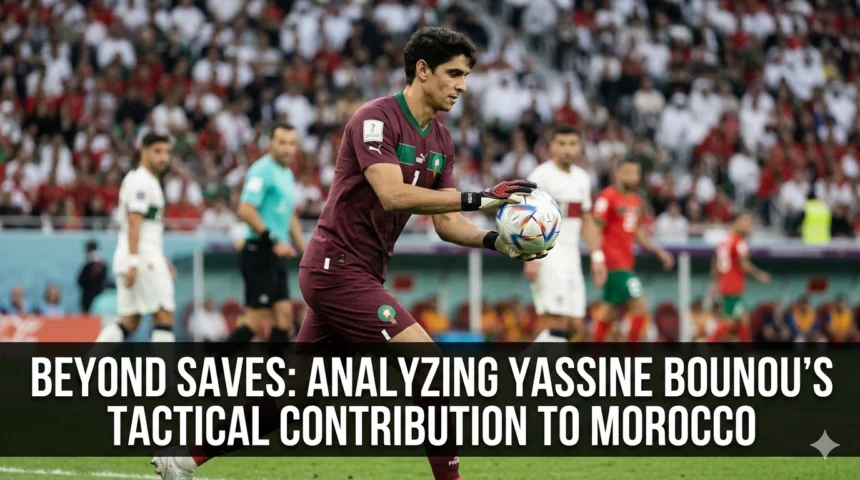
Yassine Bounou, better known as Bono, is renowned for his incredible shot-stopping abilities. His agility, reflexes, and penalty area command have made him a formidable last line of defence for the Atlas Lions. But to truly appreciate his massive value to the squad, you have to look beyond the spectacular saves and explore the depths of his tactical contributions. He is a key component of the Morocco national team’s overall success, influencing everything from build-up play to defensive solidity and game management. In this article, we will analyse the various aspects of Bono’s influence on Morocco’s strategic approach, showing why he is much more than an ordinary goalkeeper.
Morocco National Team Tactics: Bono’s Key Role Beyond the Shot-Stopping
The modern goalkeeper is not a guy who stands on the goal line. Today’s shot-stoppers are involved in every aspect of the game, and Yassine Bounou is the perfect example of this. His knowledge of the game and his technical ability on the ball make a great deal of difference to his contribution, making him a key player in Morocco’s tactical scheme.
Bono’s Distribution and Ball-Playing Skills: The Builder of Build-Up
Distribution is one of Bono’s most important tactical values. Under Walid Regragui’s coaching philosophy, Morocco often looks to play out from the back, drawing opponents in to create space further up the pitch. This strategy comes down to Bono.
Calm in the Crossfire: First Attacks
Bono always keeps his cool on the ball, even when opponents are pressing high. But instead of panicking, he methodically checks the field for passing options. This calmness means that Morocco’s defenders feel they can trust him implicitly, that he can relieve pressure and help start controlled build-up sequences. His comfort in taking back passes under pressure is key to holding on to the ball and dictating play from deep.
Pass Accuracy: Short and Long Distribution
He has an outstanding range. Bono is good at short, incisive passes to his centre-backs or full-backs, helping Morocco break the initial press. He has a feel for when to play quick, short passes to keep the ball and when to try more ambitious long balls to change the play or pick out attackers making runs. The dual threat in distribution keeps the opposition guessing and opens up various avenues of attack, fitting with Morocco’s counter-attacking brilliance.

Make the right decisions: When to play and clear.
Not only are the technical aspects top-notch, but even the decisions Bono makes regarding distribution are top-notch. He knows when to try playing out from the back and when the risk is too high, and plays safer, longer balls instead. This tactical awareness prevents costly turnovers in dangerous areas and keeps the team structurally sound. It’s a key part of the wider Walid Regragui master plan.
The Sweeper-Keeper: Organising the Backline
Bono’s impact stretches beyond his penalty box. Especially with his sweeper-keeper role, essential for Morocco’s defensive fortress. He’s an 11th outfielder.
High defensive line and positional awareness
Morocco often plays with a fairly high defensive line, especially against teams that sit deep. Bono must be willing to step out of his box and sweep up through balls behind the defence. His great spatial awareness allows him to read the trajectories of long balls and intercept them before they become dangerous, effectively limiting the space the opposition can exploit.

Communication & Organization
Bono is the last line of defence and a constant communicator with his defenders. He positions them, warns them of lurking enemies in the shadows, and keeps them alert. His leadership keeps the defensive shape compact and organised, a trademark of Morocco’s national team tactics. That constant voice in your ear can be a big help, especially when the pressure’s on.
Anticipation and Pre-emptive Measures
Bono’s game intelligence is outstanding. He reads the game well, putting himself in the right place to cut out crosses or balls in before they reach attackers. This means he is required to save fewer shots, underscoring that his tactical contribution often prevents shots rather than simply reacting to them.
Tactical Awareness & Game Management
In big games, game management is just as important as technical skill. In this dimension, Bono is a genius and very well understands the nuances of tactics.
Tempo Control
Bono’s play from the net controls the tempo of the game—slowing it down when Morocco has the lead or speeding it up when they’re chasing a goal. His measured approach to goal kicks or quick passing after saves can either frustrate opponents or add urgency to his team’s play. This control is a subtle yet powerful tactical weapon.
Deliberate Time-Wasting (If Appropriate)
Strategic time-wasting is often frowned upon, but it is a legitimate tactic in modern football, particularly in crucial matches when clinging on to a lead. Bono is good at this, knowing exactly when to take those extra seconds on a goal kick or fake a slight injury to disrupt the opposing rhythm. These moments may seem small, but they are crucial in preserving results and are part of Morocco’s overall tactical adaptability.
Stay Cool in the Heat of the Moment
Bono remains calm in the most stressful situations. His level-headedness in penalty shootouts can boost his own performance, give his teammates confidence, and unsettle the opposition. That mental strength is a huge tactical advantage, as he proved during the 2022 World Cup when he was a penalty hero.
More Read

Assisting in Mastering Set-Pieces
Set pieces are a battleground where tactical sharpness can often make the difference. On set pieces, Bono is a key player in defence and attack, in line with Morocco’s Set-Piece Mastery.
Constructing the Defensive Wall
Bono is the chief organiser of the defensive wall before free kicks. He decides how many players there will be and exactly where they will stand, and makes sure they line up to block off the most dangerous angles. He has an eye for detail and knows the opposition free-kick takers, so he is good at setting up walls and reducing the number of direct shot opportunities.
Winning the battle in the box for corners and free kicks
Bono’s aerial presence is a massive plus on corners and long free kicks. He is brave to step up and punch or catch crosses, relieving pressure from the defence. His physical presence inside the six-yard box is an important factor in clearing the clutter and putting defenders in a position to handle second balls or rebounds.
Strategies for Penalty Shootouts
Bono’s shootout displays are often credited to individual genius, but they are grounded in tactical preparation. His study of opposing players’ tendencies, psychological gamesmanship, and his ability to remain cool under immense pressure all contribute tactically to his success and Morocco’s progress in knockout tournaments.
Effect on Morocco’s Defensive Architecture
“Bono throws off the entire defensive ecosystem of Morocco. Because he’s reliable, other players can play their roles more confidently.
Confidence Building in Defenders
With a world-class goalkeeper behind them, Morocco’s defenders can afford to take more risks and be more aggressive. They can stick to challenges, step up to press, or take risks playing out from the back, safe in the knowledge that Bono covers any mistakes. This psychological boost is an underrated tactical advantage.
Allowing Midfielders to Press Higher Up the Pitch
Bono’s skills as a sweeper-keeper and with the distribution of the ball are excellent, enabling Morocco’s midfield to push up higher on the pitch. If the long balls go past midfield, Bono is usually covering, so the goal is not directly attacked. This allows midfielders to concentrate on winning the ball in more advanced areas, feeding into Morocco’s key roles and tactical contributions.
General Tactical Stability
At the end of the day, Bono provides Morocco with a bedrock of stability. His consistency, leadership, and various tactical contributions ensure that even when the team is struggling or changing its game plan, the goalkeeping position remains a source of strength and reliability. This stability is crucial for any successful team, especially one that depends on tight defensive formations as part of its Morocco national team tactics.
Bono & Walid Regragui: The Perfect Symbiosis
The link between Bono and coach Walid Regragui is a good example of tactical understanding. Bono fits the bill as the perfect executor of Regragui’s philosophy, which is based on defensive solidity, collective effort, and smart transitions.
Regragui has faith in Bono’s abilities.
Regragui has plenty of faith in Bono’s shot-stopping and his ability to get involved in the attacking build-up. This trust is seen in the fact that Morocco often plays from the back, even under heavy pressure. Bono’s composure and passing range are critical to the success of this strategy.
Adjusting to Tactical Requirements
Morocco’s style of play, whether it’s a 4-3-3 or a more defensive shape, Bono is ready to adapt his role to tactical demands. He is a jack-of-all-trades and a key man in any formation or strategy. This goes to show his role in Morocco’s core formation.
Bono is more than just a normal goalkeeper in the end. He is a tactical lynchpin who raises the entire team’s performance with his ability to distribute, command, organise, and manage games. His contributions go far beyond highlight reels; they are a crucial part of Morocco’s national team tactics and recent international achievements. His game intelligence, paired with his technical ability, makes him one of the most complete goalkeepers in modern football and a real architect of Morocco’s strategic approach.
Yassine Bounou’s Tactical Role: Frequently Asked Questions
How does Yassine Bounou influence Morocco’s build-up play?
Yassine Bounou was pivotal in Morocco’s build-up, incredibly calm under pressure and able to take the ball off defenders and initiate attacks. His accurate short and long distribution allows him to effectively bypass opponent presses and switch play, making him the first point of attack in many tactical sequences.
How important is Bounou as a sweeper-keeper in Morocco’s defensive tactics?
Bounou is a sweeper-keeper and key to Morocco’s high defensive line. He frequently leaves his box to cut through balls and clear danger, effectively shrinking the space behind the backline. His proactive interventions and keen spatial awareness remain key to maintaining a compact and organised backline.
How does Bono’s communication affect the Morocco national team’s defence?
Bono’s a communicator. On the field, he’s always communicating with his defenders about position and potential threats. His vocal leadership maintains a compact and disciplined defensive shape, creating an invaluable organisational presence at the back that is key to Morocco’s defensive fortress.
How does Bounou help Morocco control the game?
Bounou helps manage the game by regulating the speed of play with his distribution and decision-making. He knows when to slow the game down to protect a lead and when to pick up the pace. His tactical intelligence, including strategic time-wasting, helps disrupt opponents’ rhythm and secure favourable results, especially in tight matches.
How does Yassine Bounou’s presence impact the confidence of his teammates?
Bounou’s consistency and elite-level performances inspire huge faith in his teammates. Having a dependable shot-stopper and sweeper-keeper behind them allows defenders and midfielders to play more aggressively and freely. The psychological boost is a big but often overlooked advantage for the Morocco national team’s tactics.