
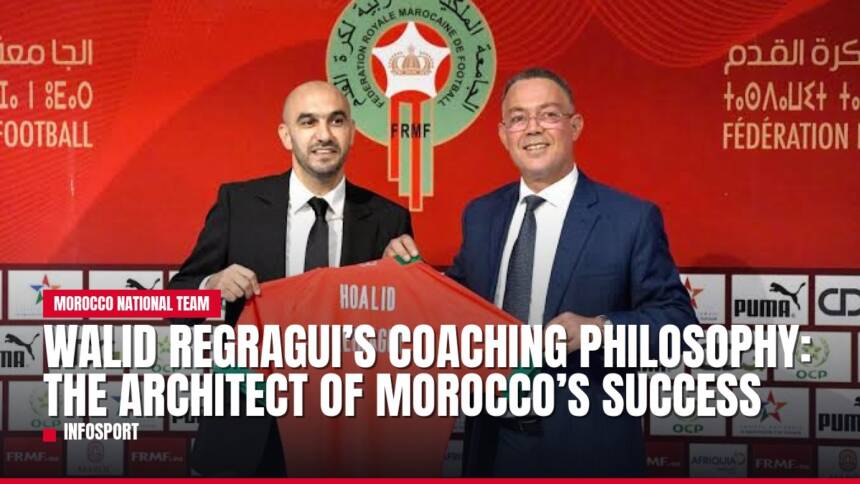
Walid Regragui’s Coaching Philosophy: The Architect Behind Morocco’s Success
The Morocco national football team’s rise to global prominence, particularly during their historic 2022 FIFA World Cup campaign, owes much to the astute leadership of head coach Walid Regragui. Though his tenure has been relatively brief, it has fundamentally transformed the Atlas Lions through a winning mentality and distinctive playing style. Understanding his approach reveals the tactical and psychological foundations underlying Morocco’s recent achievements. This article examines the principles, influences, and tactical applications that define his unique vision, a crucial element of the Tactics and Playing Style of the Morocco National Team.
The Genesis of a Philosophy: Regragui’s Influences and Background
Every coach’s approach stems from a combination of personal experiences, mentors, and deeply held convictions. Regragui’s evolution from professional footballer to visionary coach provides valuable insights into how he developed his distinctive methodology.
From Player to Coach: Early Lessons
Regragui’s playing career as a defender primarily in French clubs—Toulouse, Ajaccio, and Grenoble—immersed him in the rigorous tactical discipline and physical demands of European football. These years taught him the significance of defensive organization, positional awareness, and the collective effort essential for success. His experience under various coaches undoubtedly shaped his understanding of team dynamics and individual responsibilities.
A Tapestry of Tactical Schools
During his time in France, Regragui was exposed to a football culture emphasizing physical prowess, tactical structure, and technical skill. His subsequent coaching education and observation of global football trends enabled him to synthesize elements from diverse tactical philosophies. He adopted a pragmatic perspective, valuing defensive solidity reminiscent of Italian football while appreciating the fluid attacking principles found in Spanish and South American traditions, adapted to his team’s strengths.
Domestic Success: Laying the Foundation
Before leading the national team, Regragui refined his craft with Moroccan clubs, most notably at Wydad AC. There, he achieved significant success, including winning the CAF Champions League and the Botola Pro. These experiences allowed him to test his tactical ideas, establish strong team cultures, and demonstrate his ability to deliver results under pressure. This period proved pivotal in crystallizing the core tenets of his philosophy, revealing his capacity to build teams that were both defensively resilient and capable of incisive attacking moves.

Core Tenets of Walid Regragui’s Philosophy
At the heart of his philosophy lies a blend of tactical pragmatism, psychological mastery, and deep understanding of Moroccan football culture.
“Dima Maghrib”: The Power of Collective Spirit
The most defining aspect of his approach is the emphasis on unity and collective spirit, embodied in the chant “Dima Maghrib” (Always Morocco). He prioritizes team cohesion over individual brilliance, fostering an environment where every player feels valued and comprehends their role within the whole. This psychological foundation builds immense belief and resilience, enabling performances that exceed expectations. His ability to unite a diverse squad—bringing together players from various leagues and backgrounds—proved pivotal to their World Cup accomplishments.
Defensive Solidity as the Cornerstone
A fundamental principle is establishing an unyielding defensive foundation, which he views as prerequisite for success. Morocco under his leadership is characterized by a compact backline, disciplined positioning, and relentless effort without possession. The deep block maintains close distances, making it extremely difficult for opponents to find space between the lines or penetrate centrally. This tactical choice significantly contributed to their World Cup journey, neutralizing some of the world’s most potent attacks. For deeper analysis, explore Morocco’s Defensive Fortress: Analyzing Their Compact Backline and Pressing Strategy.

Tactical Flexibility and Adaptability
While Regragui favors a preferred system, his philosophy is far from rigid. As a pragmatic strategist, he adapts game plans based on the opponent, match circumstances, and available personnel. Morocco demonstrated remarkable tactical flexibility during the World Cup, seamlessly adjusting between defensive setups, pressing triggers, and attacking approaches. This adaptability prevents predictability and enables the team to counter various challenges posed by elite opposition. Learn more about their in-match adjustments in Tactical Adaptability: How Morocco Adjusts Their Game Plan In-Match.
Efficient Transitions and Counter-Attacking Threat
Building on their defensive strength, his philosophy emphasizes rapid transitions from defense to attack. Once possession is regained, Morocco exploits spaces vacated by opponents, utilizing the pace of Achraf Hakimi and creativity of Hakim Ziyech. Counter-attacks involve quick, precise passing sequences designed to advance the ball into dangerous areas with minimal touches, rather than hopeful long balls. This efficiency surprised many formidable opponents. The mechanics are detailed in Counter-Attacking Brilliance: Speed and Precision in Morocco’s Offensive Transitions.
Empowering Key Individuals within a System
Despite emphasizing the collective, Regragui recognizes the importance of empowering star players. He provides a framework allowing creative talents like Ziyech and Hakimi freedom to express themselves in the final third, knowing the defensive structure will offer cover. This balance allows individual brilliance to flourish without compromising overall tactical discipline. Their roles are discussed in Key Players, Key Tactics: How Hakimi and Ziyech Shape Morocco’s Attack.
Tactical Manifestations of Regragui’s Vision
His philosophy translates directly into specific tactical choices and on-field strategies that define the Atlas Lions’ playing style.
The Preferred Formations: 4-3-3 and Beyond
Morocco operates primarily from a 4-3-3 formation, which provides a strong central midfield presence and width through wingers and overlapping full-backs. This system often morphs into a 4-1-4-1 or 4-5-1 in defensive phases, especially against stronger opponents. The 4-3-3 enables a balanced approach, supporting both defensive solidity and attacking thrust. For a detailed breakdown, refer to The 4-3-3 System: How Morocco Utilizes Its Core Formation Under Regragui.
Midfield Dominance and Control
The midfield serves as the engine of his Morocco setup. Sofyan Amrabat, Azzedine Ounahi, and Selim Amallah formed a formidable trio at the World Cup, each contributing distinct qualities. Amrabat provides a defensive shield, breaking up play and protecting the backline. Ounahi offers dynamism, ball progression, and creative runs, while Amallah adds work rate and box-to-box presence. Their collective ability to control tempo, win second balls, and launch attacks is central to the philosophy. These roles are further explored in The Midfield Engine: Key Roles and Tactical Contributions of Morocco’s Midfielders.

Exploiting Width: Full-backs and Wingers
Full-backs, particularly Achraf Hakimi, play a vital role. Though defensively disciplined, they provide offensive width and overlap, creating numerical advantages in wide areas. Wingers like Ziyech and Sofiane Boufal track back defensively while offering creative spark and directness in attack. This equilibrium allows Morocco to stretch opponents while maintaining defensive integrity.
Set-Piece Prowess: A Hidden Weapon
His philosophy extends to maximizing every game aspect, including set pieces. Morocco demonstrates remarkable ability both defending and attacking from corners and free kicks. Defensively, they employ well-organized marking schemes and strong aerial presence. Offensively, they utilize clever routines, decoy runs, and accurate deliveries to create scoring opportunities. This meticulous attention to detail exemplifies his comprehensive approach. Learn more in Set-Piece Mastery: Morocco’s Strategy on Corners and Free Kicks.
The Human Element: Leadership and Motivation
Beyond tactics, his success stems from exceptional man-management skills and inspirational leadership.
Building a Family Atmosphere
Regragui famously described his squad as a “family,” a philosophy central to his leadership approach. He cultivates an environment of trust, respect, and open communication. Players feel comfortable approaching him, and he empowers them to take ownership of their roles. This familial bond strengthens morale and resilience, enabling performances under immense pressure.
Mental Fortitude and Resilience
A key aspect involves instilling unwavering mental strength. He constantly emphasizes belief, self-confidence, and perseverance. This psychological conditioning was evident in Morocco’s ability to withstand sustained pressure from top teams, maintaining defensive shape while seizing scoring opportunities.
Connecting with the Moroccan Identity
Being Moroccan himself, Regragui deeply understands the cultural nuances and national aspirations. He effectively harnessed the pride and passion of the Moroccan people as a powerful motivational force. The connection between team and supporters was palpable, creating an electric atmosphere that propelled the Atlas Lions to greater heights.
Impact and Legacy: Morocco’s World Cup 2022 Journey
His philosophy culminated in one of football’s most remarkable stories, leaving an indelible mark on the sport.
From Underdogs to Semi-Finalists
Morocco’s journey to the semi-finals demonstrated the effectiveness of his approach. They defeated football giants including Belgium, Spain, and Portugal, showcasing defensive solidity, tactical discipline, and potent counter-attacking. Their success resulted from well-executed strategy and unified team spirit rather than mere fortune. His tournament strategy is detailed in Walid Regragui’s Masterplan: Dissecting Morocco’s World Cup 2022 Tactics.
A Blueprint for African Football
Regragui’s achievements provide a tangible blueprint for African nations, demonstrating that astute coaching, tactical discipline, and strong collective spirit enable competition at the highest international level. His approach has inspired a new generation of coaches and players across the continent.
The Future of His Philosophy
As Morocco eyes future tournaments, the evolution of his philosophy will attract keen attention. While core principles remain constant, he will undoubtedly refine strategies, adapt to emerging challenges, and integrate new talent. His ongoing impact promises to shape Moroccan football and potentially influence the broader African tactical landscape. For historical context, consider The Evolution of Atlas Lions Tactics: A Historical Perspective.
Conclusion
Regragui’s philosophy represents a compelling synthesis of tactical pragmatism, defensive robustness, efficient transitions, and profound psychological motivation. He has created a team that is tactically sound, deeply united, and remarkably resilient. By prioritizing the collective, empowering individuals, and instilling unwavering belief, he transformed Morocco into a formidable global force. His approach demonstrates the power of clear vision, adaptability, and the human element in achieving extraordinary success.
FAQ Section
What is the core of Walid Regragui’s coaching philosophy?
The core centers on collective unity (“Dima Maghrib”), defensive solidity, tactical flexibility, and efficient transitions from defense to attack. He prioritizes team cohesion and mental strength, ensuring every player understands their role within a disciplined system.
How did Walid Regragui’s philosophy contribute to Morocco’s World Cup success?
His philosophy proved crucial by establishing a robust defensive structure difficult to penetrate, enabling quick and dangerous counter-attacks, and fostering unbreakable team spirit. The pragmatic approach allowed adaptation to various opponents, resulting in historic victories against top-ranked nations.
What formation does Walid Regragui primarily use for the Morocco national team?
He primarily utilizes a 4-3-3 formation. However, this system is fluid and adapts into a more defensive 4-1-4-1 or 4-5-1 shape when defending or facing stronger attacking sides.
How does Regragui balance defensive solidity with attacking flair?
He builds a strong defensive foundation first, ensuring the team remains compact and disciplined without possession. Once the ball is regained, he encourages rapid transitions and empowers creative players like Ziyech and Hakimi to express themselves offensively, trusting the collective structure to provide cover.
What is the significance of “Dima Maghrib” in Walid Regragui’s philosophy?
“Dima Maghrib” (Always Morocco) represents the national pride, unity, and collective spirit he has instilled. It serves as a psychological cornerstone of his philosophy, fostering a family-like atmosphere where players fight for each other and their country, significantly boosting morale and resilience.