
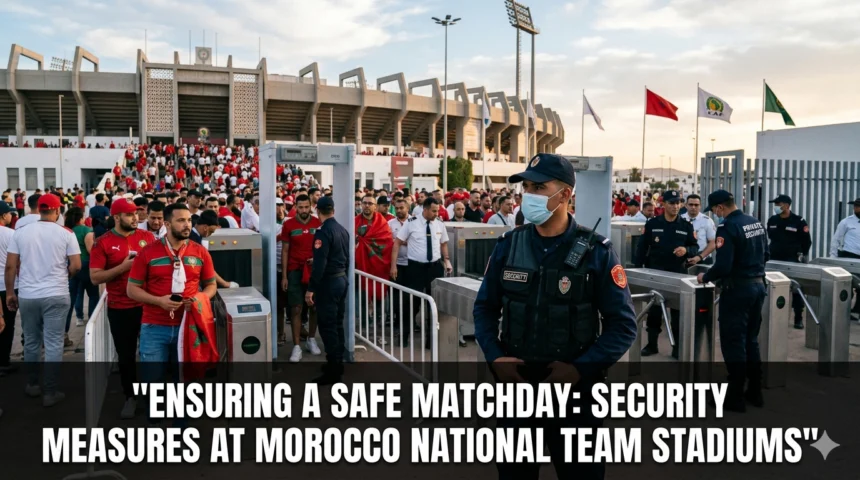
Safe Matchday: Security Protocols At Morocco National Team Stadiums
The roar of the crowd, the lively atmosphere, and the passion for football characterise any match involving the Moroccan national team. With the Atlas Lions continuing to thrill fans both at home and away, maintaining the safety and security of all attendees at these high-profile events remains paramount. This article explores the comprehensive security measures implemented across Morocco’s national team stadiums, highlighting the meticulous planning, cutting-edge technologies, and dedicated personnel who work tirelessly to ensure a secure environment for players, officials, and spectators. From entry protocols to emergency preparedness, we examine a multifaceted approach that delivers both safety and an enjoyable experience. For a broader overview of the venues themselves, read our guide on Stadiums and Home Grounds of the Morocco National Team.
Pre-Match Planning and Intelligence: The Cornerstone of Security
Effective stadium security doesn’t begin on match day; it stems from meticulous pre-event planning and intelligence gathering. This proactive approach is vital for anticipating potential threats and mitigating risks before they materialise, forming the foundation of security operations at Morocco’s national team stadiums.
Threat Analysis and Risk Assessment
Security teams conduct full risk assessments before every significant match. This involves evaluating multiple factors, including the type of fixture (local derby, international qualifier, etc.), the teams involved, historical behaviour patterns, supporter demographics, and the prevailing socio-political climate. Intelligence services and local police collaborate closely to identify specific threats—such as hooliganism, terrorism, or other forms of disruption. This ongoing analysis allows security teams to adapt their strategy and resource allocation accordingly.
Stakeholder Engagement
Seamless coordination among multiple stakeholders is essential. This includes local police forces, national gendarmerie, civil protection services, stadium management, the Royal Moroccan Football Federation (FRMF), and private security companies. Regular meetings are held to discuss security plans, assign roles and responsibilities, and establish clear communication protocols. This integrated approach ensures all parties operate from the same framework and can respond appropriately to any situation.
Entry Point Security: The First Line of Defence
Access points to Morocco’s national team stadiums represent key security checkpoints. These measures are designed to control entry, prevent prohibited items from entering, and ensure the smooth flow of spectators into the venue.

Advanced Screening Technology
Modern Moroccan stadiums employ sophisticated screening equipment. This typically includes walk-through metal detectors at all gates, supplemented by hand-held scanners for secondary screening. Security officers conduct thorough bag inspections to identify any illegal or dangerous items. These layered measures work together to maintain high security standards across all venues.
Ticket Verification
Restricting entry to legitimate ticket holders is essential to stadium security. Electronic ticketing systems with barcode or QR code scanning have become standard practice. These technologies help combat counterfeit tickets and provide real-time attendance tracking. Fans are encouraged to purchase tickets exclusively from official channels. For more information on obtaining tickets, consult our guide on How to Get Tickets for Morocco National Team Matches: A Fan’s Guide.
Prohibited Items Policy
A clearly communicated and strictly enforced prohibited-items policy is critical to security. Generally restricted items include flares, smoke bombs, pyrotechnics, weapons of any kind, large bags, glass bottles, outside food and beverages, and large banners that could obstruct views or pose safety risks. These restrictions are prominently displayed at entry points, and security personnel are trained to confiscate such items before entry.

Inside the Stadium: Maintaining Order and Rapid Response
The security presence within the stadium remains strong and vigilant throughout each event, requiring constant surveillance, crowd control, and rapid incident response capabilities.
Control Rooms and CCTV Monitoring
Morocco’s major stadiums benefit from extensive closed-circuit television networks covering the stands, concourses, and surrounding areas. These cameras feed into state-of-the-art control rooms where trained operators monitor live footage, identify potential issues, and direct ground personnel. Some systems incorporate advanced analytics, such as facial recognition technology, to identify individuals of interest and track crowd movements.
Uniformed and Undercover Officers
Uniformed police, gendarmerie, and private security stewards maintain a visible presence both inside and outside stadiums. Personnel are strategically positioned to control crowd flow, respond to disturbances, and assist spectators. Undercover officers also work discreetly to identify and address problems, particularly those involving antisocial behaviour and potential criminal activity.
Evacuation Plans and Emergency Exits
Clearly marked emergency exits are essential to spectator safety. All exits undergo regular checks to ensure they remain clear and operational. Comprehensive evacuation plans have been developed, and staff receive training to safely guide spectators during emergencies. Regular drills are conducted to maintain readiness and ensure the efficiency of these procedures.
Medical Services and First Aid Posts
Medical teams, including doctors, paramedics, and first-aid responders, are stationed throughout stadiums. Multiple clearly marked first aid stations provide immediate treatment for injuries or health issues. Ambulances remain on alert for rapid transport to hospitals when necessary, ensuring comprehensive care for all attendees.
Fan Behaviour and Crowd Management
Effective management of large crowds represents a key element of stadium security. This encompasses measures to prevent conflicts, regulate behaviour, and foster a positive matchday atmosphere.
More Read

Segregation of Fan Groups
For matches against rival teams or with significant away support, fan groups are segregated. This typically involves allocating distinct stadium sections to home and away supporters, often with buffer zones and designated entrances/exits. Such separation reduces confrontation likelihood and limits direct interaction between potentially hostile groups.
Alcohol and Drug Control
Rules governing the sale and consumption of alcohol in Moroccan stadiums are strictly enforced. Restrictions are often implemented, particularly for high-risk matches, to prevent overconsumption that may lead to unruly behaviour. Security personnel are trained to identify intoxicated individuals and those attempting to smuggle prohibited substances.
Measures Against Hooliganism
Morocco has implemented several anti-hooliganism strategies, including intelligence-gathering on known troublemakers and banning orders for individuals with histories of stadium violence. Collaboration with international law enforcement agencies helps track individuals with records of football-related disorder, preventing their attendance at matches. This forward-thinking approach is essential for maintaining order.
Fan Outreach and Education
The security strategy also emphasises building a culture of respect and sportsmanship among spectators. Educational campaigns promote positive behaviour, discourage discriminatory chants, and communicate behavioural expectations. Stadiums provide amenities and fan zones designed to create optimal experiences within controlled environments. Learn more about these initiatives at Enhance Your Visit: Hospitality and Fan Zones at Morocco National Team Stadiums.
Innovative Stadium Security Technologies
Morocco’s modernisation of stadium infrastructure includes the integration of state-of-the-art security technologies. These innovations are continuously deployed to enhance the effectiveness and efficiency of operations.
Drone-Based Perimeter Surveillance
Larger venues and high-stakes matches increasingly employ drones for aerial surveillance. These platforms provide comprehensive views of stadium perimeters, parking areas, and approach routes, enabling security teams to monitor crowd movement, identify bottlenecks, and detect unauthorised activity outside main gates.
Artificial Intelligence and Predictive Analytics
Predictive security increasingly relies on artificial intelligence. AI-powered analytics process vast data volumes from CCTV feeds, entry gates, and other sensors to identify abnormal patterns, predict crowd surges, and flag suspicious behaviour in real time. This enables security personnel to adopt proactive rather than reactive approaches.
Integrated Communication Systems
Modern stadiums feature highly integrated communication systems enabling seamless information exchange between security personnel, emergency services, and stadium management. Digital radio systems, secure mobile applications, and centralised command centres ensure vital information transmits quickly and accurately, facilitating coordinated incident responses.
Major Moroccan Stadiums and Their Security Structures: Case Studies
Morocco boasts several impressive stadiums, each presenting unique security challenges and tailored solutions. Examining these venues provides insight into how protocols are implemented across the nation.
Stadium Mohammed V, Casablanca
The legendary Mohammed V Stadium: Casablanca’s legendary roar for Morocco presents distinct challenges given its age and location in a densely populated area, though its historical significance remains undeniable. Recent renovations have added modern security features including upgraded CCTV systems, improved access control, and enhanced crowd barriers. The passionate crowds that gather for local derbies are managed through extensive collaboration between stadium management and Casablanca police.
Prince Moulay Abdellah Stadium, Rabat
The Prince Moulay Abdellah Stadium, Rabat’s Fortress for the Atlas Lions has undergone significant modernisation and now serves as Rabat’s primary football venue. Its security infrastructure has been upgraded to contemporary standards featuring improved fan segregation, clearer emergency routes, and advanced surveillance technology. Security protocols at this facility align with global benchmarks, reflecting a strong commitment to safety at venues hosting numerous international matches and major tournaments.
Stade de Marrakech
The Stade de Marrakech: The Red City’s Modern Arena for the Atlas Lions was constructed with modern safety and security features integrated from the outset. Its open design and expansive concourses facilitate superior crowd flow and enhanced sightlines for security personnel. The stadium’s contemporary infrastructure provides efficient access control, comprehensive surveillance, and well-defined emergency procedures.
World Cup Applications and Future Stadiums
Security is central to Morocco’s ambitious plans for future football infrastructure, including the proposed Grand Stade de Casablanca: A Glimpse into Morocco’s Future Football Colossus. As Morocco pursues bids for major global tournaments like the World Cup, meeting and exceeding FIFA and CAF security requirements is paramount. Future stadiums will incorporate world-class security technologies, sustainable design, and comprehensive fan safety measures. Discover more about these developments at Morocco’s World Cup Bid: Future Stadiums and Upgrades Unveiled.
Training and Readiness: The Human Factor
While technology and infrastructure remain important, the human element proves essential to effective stadium security. Any successful operation depends on well-trained and prepared personnel.
Frequent Drills and Simulations
Security personnel, stewards, and emergency services participate in regular training through drills and simulations. These exercises cover diverse scenarios, including crowd disturbances, medical emergencies, fire evacuations, and potential security breaches. Such training ensures all staff understand their roles, can respond calmly and effectively under pressure, and are familiar with emergency protocols.
Staff Training Programmes
Comprehensive staff training covers customer service, conflict resolution, first aid, cultural awareness, and emergency procedures. Stewards, as the primary point of contact for spectators, require particular emphasis on de-escalation and customer service skills. This balanced approach addresses both hospitality and security objectives.
International Best Practices
Moroccan security teams actively engage with international experts and organisations to adopt global best practices. By studying major sporting events worldwide, understanding evolving security threats, and implementing innovative solutions, Morocco ensures its protocols remain robust, adaptable, and aligned with the highest international standards. This commitment to continuous improvement helps anticipate emerging challenges.
Overview
Safe matchday operations at Morocco national team stadiums represent a complex, ongoing, and collaborative endeavour. Success requires a sophisticated blend of pre-match intelligence, state-of-the-art technology, rigorous entry protocols, vigilant in-stadium monitoring, and highly trained personnel. From the historic Mohammed V Stadium to the modern Stade de Marrakech and future projects, the commitment to security remains steadfast.
The goal is creating an environment where fans can cheer enthusiastically for the Atlas Lions without fear, enjoying the beautiful game in complete security. This commitment protects spectators while safeguarding Morocco’s reputation as a capable and responsible host of major sporting events—a reflection of national pride in footballing heritage and adherence to international standards.
FAQs
Q1: What are the main security protocols at Morocco’s national team stadiums?
A1: Critical measures include comprehensive pre-match risk assessments; sophisticated screening equipment at entry points such as metal detectors and bag checks; extensive CCTV coverage; visible uniformed and undercover security personnel; rigorous crowd management protocols; and meticulous emergency evacuation plans. These elements combine to provide robust security across all venues.
Q2: Can I bring a bag into the Morocco national team stadium?
A2: Small bags are generally permitted, but all bags undergo full inspection by security staff. Large bags, backpacks, and suitcases are typically prohibited. Check specific stadium policies or event guidelines before attending to avoid any complications.
Q3: How Do Stadiums Manage Large Crowds And Avoid Fan Violence?
A3: Multiple crowd control measures are implemented, including segregation of home and away supporters, buffer zones, clear directional signage, and trained stewards. Anti-hooliganism measures encompass intelligence gathering and banning orders for repeat offenders. Strict alcohol sale and consumption controls further prevent disorderly conduct and enhance overall stability.
Q4: What is the impact of technology on stadium security?
A4: Technology plays a vital role through advanced CCTV systems with real-time monitoring and analytics, electronic ticketing to prevent counterfeiting, and integrated communication systems enabling seamless coordination among security personnel. Some stadiums are also exploring drones for perimeter surveillance and artificial intelligence for predictive security analysis.
Q5: What should I do if I witness a security incident or need help during a match?
A5: Report any security incident immediately to the nearest uniformed officer, stadium steward, or police officer. Clearly marked first aid stations address medical emergencies. Upon entry, familiarise yourself with emergency exit locations and remain attentive to instructions from security personnel or public address announcements.