Green Goals: Eco-Friendly Projects and Sustainability at Moroccan National Team Stadiums
Environmental responsibility has become increasingly important across all sectors, and sport is no exception. As modern sports infrastructure evolves, green stadiums are emerging as a major trend worldwide. Morocco, known for its sustainable development initiatives, reflects this commitment in how it manages its football venues. This article examines the various sustainability efforts at Morocco’s national team stadiums, exploring the green practices currently implemented and those planned to ensure these iconic venues have a positive environmental impact.
The home grounds of the Atlas Lions now showcase more than exciting football—they demonstrate ecological responsibility. From energy conservation to waste management, the push for sustainability has become integral to stadium operations and growth. This commitment aligns with Morocco’s broader national vision for a greener future, extending to its most beloved sporting venues.
Demand for Green Stadiums Worldwide
Sports organisations and governing bodies globally recognise the significant environmental footprint of major events and venues. Stadiums consume substantial amounts of energy and water while generating considerable waste. Consequently, there is growing momentum to reduce these impacts through sustainable design, construction, and operational practices.
The green stadium movement stems from multiple drivers: reducing carbon emissions, conserving natural resources, minimising pollution, and enhancing community well-being. Beyond environmental benefits, sustainability improves the bottom line—lower operational costs combined with enhanced brand reputation create advantages for both the planet and business.
International standards and certifications such as LEED (Leadership in Energy and Environmental Design) and BREEAM (Building Research Establishment Environmental Assessment Method) increasingly influence how environmentally friendly sports facilities are designed and built worldwide. This global framework provides both inspiration and practical guidance for countries like Morocco to incorporate advanced sustainability measures into their sporting infrastructure.

Morocco’s National Commitment to Sustainable Development
Morocco has emerged as a leader in sustainable development, particularly across Africa. The country has launched ambitious initiatives, notably in renewable energy, aiming to derive a significant portion of its energy mix from clean sources such as solar and wind power. This national effort supports broader policies and strategies to combat climate change and build a green economy.
This commitment extends to public infrastructure, including sports facilities. National sustainability goals increasingly inform the development and upgrade of stadiums for the Moroccan National Team. This goes beyond compliance—it represents a commitment to leadership and innovation in integrating environmental responsibility across all sectors, including football.
Morocco’s vision of sustainable stadiums reflects a comprehensive national strategy. It represents a forward-thinking response to environmental challenges, leveraging modern technology and design concepts to develop world-class facilities that prioritise ecological health.
More Read

Morocco National Team Stadiums: Key Pillars of Sustainability
Achieving true sustainability in stadium operations is multifaceted, addressing environmental concerns throughout a facility’s lifecycle. These green initiatives rest on several key pillars, ranging from energy sourcing to waste management.
Energy Efficiency and Renewable Energy Integration
Energy consumption represents one of a stadium’s largest environmental impacts. Morocco’s venues are adopting multiple approaches to reduce their energy footprint. LED lighting systems, which consume significantly less power and last longer than traditional fixtures, are being widely implemented. Smart energy management systems monitor and optimise consumption across all areas, from floodlights to HVAC systems.
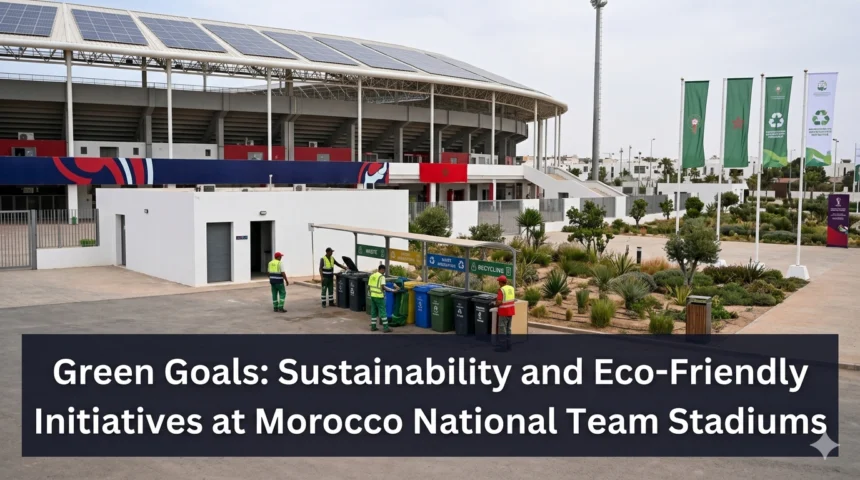
Renewable energy integration is a high priority. Stadium rooftops and surrounding areas are being utilised for solar panel installations to generate clean electricity, reducing fossil fuel dependence and supporting Morocco’s national renewable energy targets. New stadium designs, particularly those supporting Morocco’s World Cup bid, incorporate large-scale solar installations aimed at achieving near-net-zero energy consumption.
Water Conservation and Management
Water scarcity poses serious challenges in many regions, including Morocco. With large pitches and numerous facilities, stadiums are significant water consumers. To address this, Moroccan venues are implementing advanced conservation techniques. Rainwater harvesting systems collect and store precipitation for pitch irrigation, toilet flushing, and other non-potable applications.
Drip irrigation with smart sensors adjusts water application based on weather conditions and soil moisture, preventing waste. Low-flow fixtures throughout restrooms and kitchens substantially reduce overall consumption. Wastewater and greywater treatment and recycling systems are being explored or installed to reuse water, further decreasing freshwater demand.
Recycling and Waste Reduction Programs
Mass events generate substantial waste, making sustainable waste management essential to stadium sustainability. Comprehensive recycling programs feature clearly marked bins for various waste types—plastics, paper, glass, and organic materials—positioned strategically throughout venues.

Efforts to reduce single-use plastics encourage reusable alternatives for food and beverage service. Composting organic waste from food vendors and landscaping decreases landfill volume while producing valuable soil amendments. Partnerships with local recycling companies and waste-to-energy facilities ensure responsible handling and minimal environmental impact.
Sustainable Design and Green Building Materials
Stadium construction and renovation offer significant opportunities to embed sustainability from inception. This involves careful selection of building materials and application of sustainable design principles. Moroccan projects prioritise locally sourced materials when feasible, reducing transportation emissions while supporting the local economy. Materials made with recycled content, low in volatile organic compounds (VOCs), and sustainably certified are preferred.
Architectural design plays a crucial role in reducing environmental impact. Passive design strategies—optimising natural ventilation, maximising daylighting, strategic orientation, effective shading, and high-performance insulation—reduce needs for artificial heating, cooling, and lighting. These principles guide future projects, such as the Grand Stade de Casablanca, which aims to achieve international green building certifications.
Sustainable Transportation
Spectator travel to and from stadiums carries significant environmental impact. Efforts are underway to promote sustainable transportation options. Improved access to public transport networks—including bus and tram lines—encourages fans to choose public transit over private vehicles. Stadium designs now feature dedicated cycling lanes and extensive bicycle parking facilities.
For those who drive, electric vehicle (EV) charging stations are becoming standard in stadium parking areas. Pedestrian-friendly design that makes stadiums easily accessible on foot from surrounding urban areas further reduces traffic congestion and emissions while enhancing the fan experience and promoting healthier lifestyles.
Biodiversity and Green Spaces
Integrating green spaces and supporting biodiversity around stadiums constitutes another important sustainability aspect. Native plantings offer drought resistance and support local ecosystems. Green roofs and vertical gardens contribute to stormwater management, improve air quality, and provide wildlife habitat.
Stadium surroundings are carefully planned to respect and enhance the local natural environment where possible. This integrated approach ensures stadiums function as part of their ecological and urban context rather than isolated structures.
Major Stadiums: Current Efforts and Future Outlook
Current work and plans for Morocco’s primary football stadiums demonstrate dedication to sustainability. Each venue’s age and character present both opportunities and challenges for developing green initiatives.
Prince Moulay Abdellah Stadium: Rabat’s Fortress
Prince Moulay Abdellah Stadium in Rabat, a primary Atlas Lions venue, has undergone significant renovation. Its age created opportunities to upgrade and integrate modern sustainability features, including energy-efficient HVAC and lighting systems. Future development, especially for potential international tournaments, will likely include enhanced water recycling, improved waste management, and increased renewable energy use to meet global standards.
The stadium’s location within a major urban centre creates opportunities to promote public transportation and reduce fan travel carbon footprints. Ongoing operational evaluation will inform further green modifications.
Mohammed V Stadium: Casablanca’s Legendary Venue
The Mohammed V Stadium in Casablanca, one of Morocco’s oldest and most iconic venues, presents unique challenges for implementing sustainability measures. Retrofitting existing structures requires careful planning and substantial investment. However, even established stadiums can make significant progress. Current initiatives focus on strategic upgrades—LED lighting, comprehensive match-day recycling programs, and optimised water use for pitch maintenance.
These efforts balance modern sustainability technology with respect for the stadium’s rich heritage as the home ground of the Moroccan National Team. Community engagement around responsible waste disposal and public transport use is particularly important in this dense urban area.
Stade de Marrakech: The Red City’s Modern Arena
The Stade de Marrakech, a more recent facility constructed to contemporary standards, offers greater opportunities for sustainability integration. Its modern design enables incorporation of highly efficient systems for lighting and climate control. The architectural approach provides ample natural light and ventilation, reducing dependence on artificial systems.
Landscape and amenity design create opportunities for sustainable water management and use of indigenous plants, making it a key example of how newer stadiums can be built with strong environmental stewardship emphasis.
New Stadiums and World Cup Bid
Morocco’s ambition to host major international tournaments, including the FIFA World Cup, has prioritised construction of new, state-of-the-art stadiums. Proposed venues such as the Grand Stade de Casablanca are designed with sustainability as a central principle from the outset. World Cup bid documentation emphasises commitments to green building certifications, extensive renewable energy use, advanced water recycling, and comprehensive waste management systems.
These new facilities represent Morocco’s vision for sports infrastructure’s future—world-class design, capacity, and environmental performance. They will showcase sustainable stadiums demonstrating how major sporting events can be held responsibly.
The Role of Fans and Community Involvement
Stadium sustainability depends not solely on management but heavily on active participation from fans and the broader community. Educating spectators about eco-friendly practices—proper waste segregation and public transport benefits—is essential.
Accessible recycling facilities, digital ticketing (see How to Get Tickets for Morocco National Team Matches: A Fan’s Guide), and incentives for sustainable travel significantly reduce match-day environmental impact. Fan zones and hospitality areas, detailed in Enhancing Your Visit: Hospitality and Fan Zones at Morocco National Team Stadiums, can promote sustainable consumption and behaviour.
Community outreach programs engaging residents in greening projects around stadiums create shared responsibility and pride. Supporters, clubs, and local authorities can collaborate to ensure stadiums function as community centres for environmental action beyond their sporting role.
Challenges and Opportunities in Creating Green Stadiums
Morocco demonstrates strong commitment to stadium sustainability, yet challenges exist. Initial investments in sustainable technologies and green materials exceed conventional approaches. Retrofitting older stadiums to meet modern green standards presents complex engineering and financial obstacles.
Changing behaviour among diverse audiences of fans and staff requires continuous effort and education to reinforce sustainable transport choices and recycling participation. Despite these challenges, substantial opportunities exist.
Sustainability drives innovation in design and technology while creating new jobs and expertise. It enhances Morocco’s international image as a progressive nation committed to environmental protection. Sustainable stadiums also deliver long-term operational savings, improved air quality, and healthier environments for all visitors, supporting the broader vision for The Iconic Stadiums: Where the Morocco National Team Forges History.
Final Thoughts
Morocco’s journey toward comprehensive stadium sustainability is ongoing and progressive. From historic grounds that have witnessed countless Atlas Lions victories to ambitious plans for future world-class venues, eco-friendly practices have become integral to the game. By prioritising energy efficiency, water conservation, waste reduction, green building, and sustainable transport, Morocco is setting a strong example.
These initiatives align with the nation’s broader environmental objectives while ensuring Moroccan stadiums are responsible global citizens. With football as a unifying force, its venues have become symbols of environmental stewardship, proving that passion for the game and commitment to planetary health can coexist. The future of Moroccan football stadiums is undoubtedly green, driven by dedication to creating a sustainable legacy for generations to come. For comprehensive information on these important venues, visit our page on Stadiums and Home Grounds of the Morocco National Team.
FAQ: Sustainability of Morocco National Team Stadiums
What are the primary sustainability goals for the national team stadiums in Morocco?
Key sustainability goals include reducing energy consumption through renewable energy and efficiency measures, conserving water via modern management systems, minimising waste through extensive recycling and reduction programs, utilising green building materials, and encouraging sustainable transportation for fans and staff.
Are environmentally friendly practices being implemented at existing stadiums like Mohammed V Stadium?
Yes, even established venues like the Mohammed V Stadium are pursuing eco-friendly initiatives. While retrofitting presents challenges, upgrades are underway including LED lighting conversion, comprehensive waste management programs, and water-use optimisation. Future renovation projects will expand sustainability enhancements.
How important is sustainability in future stadium plans, such as those for the World Cup bid?
Sustainability is central to future stadium plans. Developments related to Morocco’s World Cup bid and new projects like the Grand Stade de Casablanca incorporate sustainability from the design phase, targeting international green building certifications, extensive solar power use, advanced water recycling, comprehensive waste management, and designs leveraging natural light and airflow.
What is the role of supporters in Morocco’s stadium sustainability efforts?
Fans play a vital role by participating in recycling programs, using public transport or carpooling to reduce emissions, and being conscious of their waste generation. Educational campaigns and stadium signage promoting responsible behaviour are key components of overall sustainability goals.
What are the long-term benefits of investing in sustainable stadiums?
Long-term benefits include reduced operating costs through energy and water savings, decreased environmental impact, enhanced national and international reputation, improved fan experience, and alignment with Morocco’s broader commitment to sustainable development and climate action.