
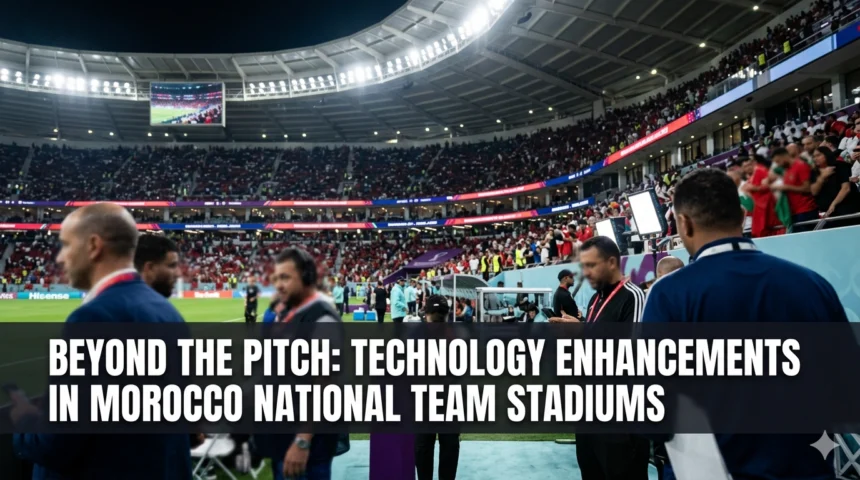
Morocco’s football scene has undergone a stunning transformation, not just on the pitch with the Atlas Lions’ inspiring displays, but also in the stadiums themselves. The stadiums and home grounds of the Morocco national team have been developed to reflect the country’s ambitions, with a keen emphasis on integrating cutting-edge technology. In this article, we delve into how Morocco’s national team stadium technology is transforming the fan experience, enhancing player performance, and ensuring the sustainability and security of these vital sports facilities.
Moroccan stadiums are being upgraded to global standards, featuring high-speed connectivity and smart pitch management systems. This technological evolution is part of a larger vision for developing the game in the kingdom as it prepares to host major international events and increase the sport’s appeal to its passionate fan base. The digital revolution is touching every aspect of stadium operations, making match days more engaging, efficient, and memorable for everyone involved.
The Digital Evolution of Moroccan Football Stadiums
Modern football stadiums are more than just places to watch matches; they’re multi-faceted entertainment hubs powered by technology. This philosophy is gradually being adopted in Moroccan national team venues, with significant infrastructure investments delivering seamless, engaging experiences. This digital transformation represents a strategic alignment with global trends, setting new benchmarks for regional sports facilities.
The evolution encompasses a wide spectrum of systems, from giant screens and efficient ticketing solutions to the invisible networks supporting security, communication, and environmental controls. The goal is developing smart venues that adapt to different events, providing real-time information and personalizing experiences for attendees. To remain competitive and secure future hosting rights, integrating the latest technology into Morocco’s national team stadiums is crucial.
How Technology Enhances the Fan Experience
Fans are at the heart of every stadium upgrade. Technology is vital to making visits to Moroccan national team stadiums more enjoyable, accessible, and immersive. These smart solutions improve the fan experience from the moment of considering attendance through the journey home.

Wi-Fi and Connectivity
In today’s connected world, reliable internet access is essential. Moroccan stadiums are rolling out Wi-Fi networks and improving cellular coverage, enabling fans to share experiences in real-time, access match statistics, and stay connected. High-density connectivity allows thousands of simultaneous users without signal drops or slow speeds.
Strong Wi-Fi also enables stadium operators to deploy fan engagement apps and deliver digital services directly to phones. This seamless integration transforms stadiums into interactive spaces where fans remain engaged throughout their visit—a key element of modern Morocco national team stadium technology.
Immersive LED Screens and Digital Signage
Giant LED screens and digital display boards are now standard in premier stadiums, including Morocco’s venues. High-definition displays provide instant replays, live statistics, dynamic advertising, and critical match information, ensuring fans never miss the action. These vibrant visuals amplify the atmosphere, particularly during goal celebrations and pivotal moments.

Beyond pitch-side screens, digital signage in concourses and hospitality areas provides wayfinding, concession menus, and promotional content. This comprehensive display system ensures information is always accessible and presented engagingly, enhancing the overall venue experience.
Mobile Ticketing and Access Control Systems
Long queues and paper tickets are becoming obsolete. Moroccan stadiums are transitioning to mobile ticketing, allowing fans to purchase, store, and present tickets directly from their phones. This approach offers convenience while reducing fraud and providing valuable crowd management data.
Sophisticated access control systems, including QR code scanners and biometric turnstiles, accelerate entry while enhancing security and minimizing bottlenecks. This streamlined process significantly improves the fan journey. For more details, discover how to get tickets for Morocco National Team matches and enter venues hassle-free.
Interactive Platforms and Fan Apps
Many modern stadiums now feature dedicated mobile applications offering live updates, exclusive content, player profiles, food and beverage ordering, and interactive games or polls. These platforms create direct communication channels between stadiums and visitors.
By incorporating such apps, Moroccan stadiums deliver customized experiences, enabling fans to personalize their visits and engage with matches in innovative ways. This digital ecosystem strengthens connections between supporters and the Atlas Lions and complements the offerings available in hospitality and fan zones at Morocco national team stadiums.
Transforming Player Performance and Training
Technology is revolutionizing outcomes not only for fans but also for athletes and coaching staff. Contemporary Morocco national team stadium technology provides essential tools supporting training, performance analysis, and injury prevention, elevating the team’s capabilities on the world stage.
More Read

Advanced Pitch Management Systems
For elite football, playing surface quality is paramount. Morocco’s national stadiums have invested in state-of-the-art pitch management systems ensuring optimal conditions year-round. These include hybrid turf solutions combining natural grass with synthetic fibres for durability and consistency, along with sophisticated irrigation, drainage, and climate control systems.
Embedded sensors measure moisture, temperature, and nutrient content, enabling ground staff to manage playing surfaces with precision. This scientific approach maintains pitch condition, reducing injury risk and supporting high-standard play.
Performance Tracking and Data Analytics
Data plays a vital role in modern football. Moroccan national team stadiums and training facilities are equipped with advanced analytics and performance-tracking technologies. Players wear GPS trackers during training and matches, providing real-time insights into speed, distance covered, acceleration, and heart rate.
Integrated video analysis systems allow coaches to examine tactical movements, individual performance, and opponent strategies with unprecedented detail. This wealth of data enables better decision-making, improved training programs, and tailored strategies to unlock team potential—demonstrating an essential element of advanced Morocco national team stadium technology.
State-of-the-Art Training Facilities
Training facilities supporting the Moroccan national team are undergoing major technological upgrades. These often feature specialized fitness centers with cutting-edge strength-and-conditioning equipment, hydrotherapy pools, and dedicated recovery areas.
Indoor training pitches equipped with AI-powered ball machines and virtual reality training simulations are increasingly prevalent. These comprehensive environments support comprehensive player development, ensuring the Atlas Lions have all resources to enhance skills and maintain peak physical condition.
Modern Technology for Safety and Security
Ensuring attendee safety and security is paramount for any major sporting event. Morocco national team stadium technology incorporates state-of-the-art systems for surveillance, crowd management, and emergency response.
CCTV and Surveillance Systems
High-definition CCTV cameras are strategically positioned throughout Moroccan stadiums, comprehensively covering public areas, entrances, and exits. These systems often include sophisticated features such as facial recognition software, anomaly detection, and continuous monitoring by dedicated security personnel.
Smart surveillance networks enable crowd movement tracking, threat identification, and rapid incident response. This proactive security approach prevents issues before they arise, providing peace of mind for fans and staff alike.
Emergency Response and Communication Infrastructure
During emergencies, rapid and effective communication is critical. Contemporary Moroccan stadiums incorporate emergency response systems including public address systems, digital signage indicating evacuation routes, and direct communication with emergency services.
These systems are typically centralized in a command-and-control center, allowing security personnel to coordinate responses, disseminate information, and guide attendees safely. Regular drills and technological upgrades ensure continuous readiness, highlighting the resilience of Morocco national team stadium technology during critical situations.
Turnstile and Biometric Access Control
Beyond mobile ticketing, some stadiums are exploring biometric access systems such as fingerprint or facial recognition to enhance security and accelerate entry. These systems quickly and accurately authenticate identities, preventing unauthorized access and improving overall crowd flow.
Modern turnstiles integrate sophisticated software providing real-time crowd density and entry rate data. This information is critical for managing queues, scheduling additional staff, and ensuring smooth, safe entry for large crowds.
Environmental Responsibility and Sustainability
As global environmental awareness grows, modern stadiums are incorporating sustainability into their design. Moroccan venues are adopting green technologies to minimize their environmental footprint and promote sustainable resource management.
Renewable Energy Integration
Many new or renovated Moroccan stadiums utilize renewable energy sources such as solar panels to power operations. Solar arrays on rooftops or parking canopies generate substantial electricity, reducing grid dependence and lowering operating costs.
Energy-efficient LED lighting, smart HVAC systems, and building management systems optimize energy consumption throughout venues. These initiatives demonstrate commitment to environmental stewardship, ensuring stadiums are both technologically advanced and eco-friendly.
Water Recycling and Management
Water conservation is another crucial aspect of sustainable stadium design. Moroccan stadiums are installing advanced water management systems, including rainwater harvesting for pitch irrigation and landscaping, and greywater recycling for non-potable uses such as toilet flushing.
These technologies significantly reduce fresh water consumption, particularly valuable in arid regions. Smart irrigation systems use sensors to deliver water precisely when and where needed, minimizing waste and optimizing resource use.
Recycling Programs and Waste Management
Large venues require comprehensive waste management. Moroccan national team stadiums are implementing recycling programs for plastics, paper, glass, and organic waste generated during events. Designated recycling bins, signage, and staff training encourage participant involvement.
Complementing these efforts are composting facilities for organic waste and partnerships with recycling companies. By reducing landfill waste and promoting a circular economy, stadiums demonstrate dedication to environmental responsibility and technological excellence.
Leading Moroccan Stadiums in Technological Innovation
Morocco is advancing national team stadium technology across several key venues, establishing standards for future developments.
Prince Moulay Abdellah Stadium: A Centre of Innovation
Prince Moulay Abdellah Stadium in Rabat has undergone extensive renovation and stands as one of Morocco’s most technologically advanced venues. It features state-of-the-art pitch management systems including hybrid grass and sophisticated irrigation, modern LED screens delivering outstanding viewing experiences, and robust connectivity infrastructure keeping fans engaged.
Security measures have also been upgraded with comprehensive CCTV coverage and effective access control. These enhancements are essential given Rabat’s regular hosting of major international matches and tournaments requiring facilities meeting strict international standards.
Mohammed V Stadium: Where Heritage Meets Modernity
Casablanca’s historic Mohammed V Stadium is keeping pace with modern technology. Recent upgrades focused on improving spectator comfort and safety, including new seating, enhanced lighting, and improved sound systems. Digital display boards provide clear information, and match-day atmosphere has been significantly improved.
The challenge for Mohammed V Stadium involves integrating new national team stadium technology into an existing structure while honoring its storied past and meeting contemporary football demands. Ongoing upgrades to connectivity and security infrastructure will maintain its status as a premier venue for the Atlas Lions.
Stade de Marrakech: Modern Stadium with Advanced Technology
As a relatively recent construction, the Stade de Marrakech was designed with modern technology from inception. It features sophisticated architectural lighting, high-quality sound systems, and comprehensive surveillance networks. The design includes sustainable elements, reflecting a progressive approach.
It possesses ideal infrastructure for major events, with excellent connectivity and modern facilities for fans and players. Stade de Marrakech exemplifies how modern design combined with cutting-edge Moroccan national team stadium technology produces a world-class sporting arena.
The Future of Morocco National Team Stadium Technology
Morocco’s commitment to technological advancement in its stadiums continues to evolve. Technology will become increasingly sophisticated, particularly as the country pursues hosting major global sporting events.
Smart Stadiums and IoT Solutions
The smart stadium concept is rapidly advancing, with the Internet of Things (IoT) at its center. Future Moroccan stadiums will likely feature expansive IoT networks connecting sensors and devices throughout venues, including smart parking systems directing drivers to available spaces, intelligent climate control responding to crowd density, and predictive maintenance systems for all infrastructure.
IoT integration will enable every stadium component to function intelligently and interconnected, delivering enhanced operational efficiency, personalized fan experiences, and improved safety. This comprehensive approach represents the pinnacle of Moroccan national team stadium technology.
Augmented Reality and Virtual Reality Experiences
Augmented Reality (AR) and Virtual Reality (VR) will transform fan engagement. Imagine pointing your phone at the pitch to see player statistics overlaid in real time, or using VR for virtual stadium tours or historical match recreations. These technologies offer highly immersive, interactive experiences transcending traditional viewing methods.
VR could provide tactical training simulations, allowing players to practice complex scenarios in virtual environments without physical exertion. AR applications could assist ground staff in maintenance and facilities management through digital infrastructure overlays.
AI and Predictive Maintenance-Enabled Operations
Artificial Intelligence will increasingly optimize stadium operations. AI-based analytics can process vast data volumes from security cameras, access control systems, and IoT sensors to predict crowd movements, identify potential security threats, and allocate resources efficiently.
AI-driven predictive maintenance systems monitor stadium infrastructure health—lighting systems, HVAC units—detecting potential failures before occurrence. This proactive approach ensures smooth operations, minimizes downtime, and reduces costs, exemplifying the intelligent future of Morocco national team stadium technology.
World Cup Bid and Infrastructure Development
Morocco’s pursuit of FIFA World Cup hosting has been a major catalyst for stadium infrastructure and technology development. Hosting such a high-profile tournament requires facilities that are not only impressive but also technologically sophisticated and capable of managing large international crowds.
Regarding future developments related to Morocco’s World Cup bid and future stadium plans, there are plans to construct entirely new, ultra-modern stadiums such as the Grand Stade de Casablanca, equipped with latest smart stadium technology, sustainability features, and fan experience innovations. These projects will undoubtedly elevate Morocco’s national team stadium technology to world-class standards.
Summary
Morocco’s national team stadium technology narrative is a compelling and evolving story, mirroring the Atlas Lions’ ascendancy on the global football stage. Technology underpins Morocco’s footballing ambitions, whether enhancing the fan experience through seamless connectivity and immersive displays or revolutionizing performance via data analytics and cutting-edge training facilities.
Moreover, the emphasis on safety, security, and environmental sustainability reflects an integrated approach to stadium development, ensuring these venues are both state-of-the-art and responsible. With each new infrastructure investment, Morocco builds toward a future of success and potential to host major events. Its stadiums will stand as monuments to technological prowess, securing their place among iconic venues where the Morocco national team forges history, moving from the past and present of home grounds into a new era of digital excellence.
FAQs
What kind of technology is being integrated into Morocco’s national team stadiums?
Morocco’s national team stadiums are implementing high-speed Wi-Fi, large LED screens, mobile ticketing and access control systems, advanced pitch management, player performance data analytics, comprehensive CCTV surveillance, and eco-friendly energy solutions including solar panels and water recycling systems.
What technologies improve the fan experience in Moroccan stadiums?
Technology enhances fan experiences through reliable connectivity, immersive digital displays for replays and information, convenient mobile ticketing, and interactive fan engagement apps. These features make match days more engaging, efficient, and enjoyable.
Is Morocco investing in technology for player training and performance?
Yes, significant investment supports player training and performance through advanced pitch management systems, data analytics and GPS tracking for performance analysis, and world-class training facilities featuring state-of-the-art gyms, hydrotherapy, and potential VR training simulations.
How do Moroccan stadiums use technology for safety and security?
Moroccan stadiums employ high-definition CCTV and surveillance systems, often with advanced analytics, integrated emergency response and communication networks, and access control systems such as biometric turnstiles for crowd flow management and unauthorized entry prevention.
What technological trends are anticipated in Moroccan national team stadiums, especially regarding World Cup bids?
Emerging trends include “smart stadiums” with extensive IoT integration for operational efficiency, Augmented Reality (AR) and Virtual Reality (VR) for enhanced fan and player experiences, and AI-powered operations for predictive maintenance and crowd management. Morocco’s World Cup aspirations are spurring integration of these cutting-edge technologies into new and existing stadiums.