Attending a match of the Moroccan national team is a thrilling experience, offering a genuine immersion into the passion for Moroccan football. To ensure your matchday experience is smooth and stress-free, it is important to understand the best ways to reach Moroccan national team stadiums. Whether you are a local supporter or an international fan, navigating bustling cities and reaching iconic venues requires some planning. This guide covers all transport options to get you to the heart of the action with ease.
Morocco boasts several impressive stadiums, each with unique locations and accessibility considerations. Reaching these footballing bastions—from the bustling streets of Casablanca to the historic boulevards of Rabat and the scenic landscapes of Marrakech—typically involves a combination of public transport, taxis, and occasionally special matchday services. For comprehensive information on these magnificent venues, see our guide to the stadiums and home grounds of the Morocco National Team.
General Tips for Getting Around to Watch Moroccan National Team Matches
Before diving into stadium-specific details, here are some essential tips for navigating Moroccan cities on match day. Being prepared can significantly enhance your experience and help ensure you arrive on time.
Planning Your Trip Ahead of Time
Match days typically bring increased traffic and higher transport demand. We strongly recommend planning your journey well in advance. Check the kick-off times, factor in travel time, and allow extra time for potential delays, especially if travelling from another city. For details on securing your spot, consult our guide on How to Get Tickets for Morocco National Team Matches: A Fan’s Guide.
Local Transport Options
Moroccan cities offer diverse transport options, including grand taxis (shared or private vehicles for intercity or long-distance travel), petit taxis (smaller metered taxis for city travel), local buses, and modern tramway systems in major cities such as Casablanca and Rabat. Ride-sharing apps are also gaining traction in larger urban areas.

Match Day Traffic and Crowds
Expect heavy traffic and larger crowds around stadiums in the hours before and after matches. Routes may change, and road closures frequently occur. Usually, the best option is to be dropped off or take public transport and walk a short distance to the stadium.
How to Get to Key Morocco National Team Stadiums
The Atlas Lions play in different venues, each offering a distinct matchday atmosphere. Knowing the best route to each is essential. Here’s a breakdown of the most-used venues, also featured in The Iconic Stadiums: Where the Morocco National Team Forges History.
Casablanca: Stade Mohammed V
The legendary Mohammed V Stadium: Casablanca’s Iconic Roar for Morocco is nestled in the heart of Casablanca and stands as one of Morocco’s most iconic football venues. While its central location makes it relatively accessible, the area is prone to heavy traffic.

Public Transport: Tram
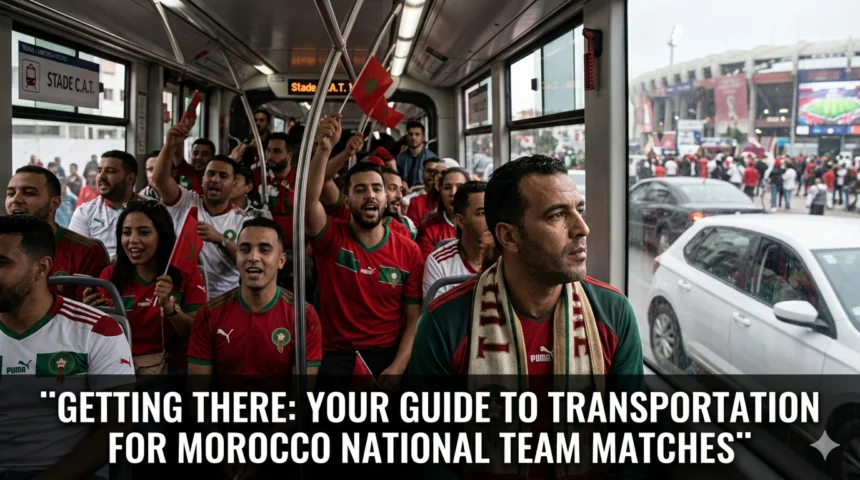
The tramway offers an excellent way to reach Mohammed V Stadium. The stadium sits conveniently near several tram stations, with the T1 line providing access near the stops “Place Mohammed V” or “Anfa Park,” both within reasonable walking distance. The tram is an affordable and reliable option that bypasses traffic congestion.
Ride Sharing and Cabs
Casablanca has numerous petit taxis (red vehicles). Ensure the driver uses the meter or agrees on a fare before departing. On match days, taxis become scarce near the stadium, and surge pricing is common on ride-share apps. Pre-booking or walking a few blocks from the immediate stadium area helps secure transport more easily.
Parking and Private Vehicles
Taxis remain the preferred option since parking is limited on match days and traffic is heavy. If driving, arrive very early and expect to park some distance away and walk. Many fans opt to park farther out and take the tram or taxi for the final stretch.
Rabat: Stade Prince Moulay Abdellah
Located in the south of the city, Prince Moulay Abdellah Stadium: Rabat’s Fortress for the Atlas Lions serves as the city’s premier football venue for national and international matches.
Public Transport: Tram and Bus
Rabat features an efficient tramway network. While the tram doesn’t reach the stadium entrance directly, you can disembark at “Hay Nahda” or “Bab Chellah” on line 2 (connecting Salé to Rabat’s Agdal quarter) and take a taxi or walk further. Local bus services operate nearby routes, though they may be less frequent and more crowded on match days.
Taxis and Carpooling
Petit taxis (blue vehicles) are readily available throughout Rabat. Always confirm meter usage or agree on a fare beforehand. Given the stadium’s location, taxis are often the easiest way to complete your journey. Consider pre-booking a taxi for your return trip to avoid delays after the game.
More Read

Private Car and Parking
Parking here is slightly more accessible than in Casablanca but remains limited and fills quickly. If driving, arrive early and be mindful of parking regulations to avoid fines or towing.
Marrakech: Stade de Marrakech
The modern Stade de Marrakech: The Atlas Lions’ Modern Venue in the Red City is situated in Marrakech’s northern suburbs, requiring special transport planning due to its peripheral location.
Public Transport: Bus
Marrakech operates a public bus network, and special matchday lines sometimes serve areas near the stadium. However, these services can be infrequent and extremely crowded. Check local bus timetables and routes closer to the match date.
Taxi and Ride-Sharing
The primary local transport is the petit taxi (beige colored). Given the stadium’s distance from the city center, expect a slightly higher fare. Unlike in Casablanca and Rabat, Marrakech taxis typically don’t use meters, so always negotiate a price beforehand. Ride-sharing apps offer price transparency and can be a reliable alternative.
Matchday Shuttles
For major events, dedicated shuttles are occasionally organized from central locations such as Jemaa el-Fna square or major hotels to the stadium. Such services are available only upon official announcements from the Royal Moroccan Football Federation (FRMF) or stadium management.
Parking and Private Vehicle
Driving to Stade de Marrakech is viable, as parking availability generally exceeds that of central city stadiums. However, designated lots can still fill quickly. Arrive early to secure a spot and be prepared for a short walk to the entrance.
Agadir: Grand Stade d’Agadir (Adrar Stadium)
The Grand Stade d’Agadir, also known as Adrar Stadium, is a large venue in southern Morocco, located several kilometres outside the city centre.
Buses
Local buses run from Agadir’s city centre to the stadium area, though services may require transfers and can be time-consuming. Check ahead for available routes and schedules.
Taxi
Red petit taxis provide the easiest option from Agadir’s city centre. Agree on the price beforehand. Journeys will take longer than in Rabat or Casablanca due to the distance.
Matchday Buses
As in Marrakech, special shuttle services are often provided from central locations for major events at Adrar Stadium. Check with local tourism offices or official event announcements.
Car and Parking
Adrar Stadium is generally accessible by car and offers more parking than many urban venues. However, congestion can still occur on match days, so arriving early is advisable.
Tangier: Stade Ibn Battouta
Situated on Tangier’s outskirts, Stade Ibn Battouta is a modern facility frequently used for national team matches, particularly against European or North African opponents, due to Tangier’s strategic location.
Public Transport: Buses
Tangier has a public bus network with routes passing through areas near the stadium. However, direct and frequent services specifically for match days are not always guaranteed. Check local schedules in advance.
Taxi
Petit taxis (light blue vehicles) form the primary transport option in Tangier. A ride from the city centre or train station to Stade Ibn Battouta typically takes 15-25 minutes, depending on traffic. Always ensure the meter is running or establish a fare before starting your journey.
Private Vehicle and Parking
Local residents generally prefer driving to Stade Ibn Battouta. The stadium features adequate parking facilities, though they become congested on match days. Arrive early to secure a spot and familiarize yourself with access roads.
Travelling Between Cities for Matches
If you’re travelling between cities to watch a game, Morocco offers several efficient options.
Trains (ONCF)
Morocco operates a modern and reliable train network managed by the national railway company, ONCF, connecting major cities including Casablanca, Rabat, Tangier, Fes, and Marrakech. The high-speed Al Boraq line links Tangier, Kenitra, Rabat, and Casablanca, significantly reducing travel times. This is typically the most comfortable and efficient option for intercity travel during match weekends. Pre-book tickets, especially for popular routes and match periods.
Buses (CTM, Supratours)
Intercity buses operated primarily by CTM and Supratours (both ONCF subsidiaries) serve most of Morocco. Buses are generally cheaper than trains and reach destinations beyond the rail network. Booking tickets in advance is recommended, particularly for long-distance or peak-time journeys.
Flights (Royal Air Maroc)
For longer distances, such as flying from Dakhla or Laâyoune to Casablanca, domestic flights with Royal Air Maroc (RAM) are available. However, for typical match destinations, trains or buses are usually more practical and environmentally friendly.
Best Practices and Logistics on Match Day
Beyond knowing how to get there, other best practices enhance your matchday experience.
Arrive Early
Aim to reach the stadium 1.5 to 2 hours before kick-off. This allows ample time to clear security, find your seat, soak in the pre-match atmosphere, and perhaps explore the Enhancing Your Visit: Hospitality and Fan Zones at Morocco National Team Stadiums.
Stay Updated
Check official stadium websites, the FRMF website, or local news outlets closer to the match date for transport advisories, road closures, or special shuttle services.
Cash and Local Currency
While card payments are becoming more common in larger establishments, it’s always wise to carry small denominations of Moroccan Dirhams (MAD) for taxis, street vendors, and smaller purchases around the stadium.
Security and Safety
Remain aware of your surroundings, particularly in crowded areas. Protect your belongings. If using taxis, ensure they are official and have the meter running or agree on a price in advance.
Accessibility Information
Moroccan stadiums are gradually becoming more inclusive for fans with disabilities. Consider the following when planning your transportation to Morocco National Team stadiums:
Accessible Transport
Casablanca and Rabat feature newer tramways and public transport systems with better accessibility, though older buses and petit taxis can present challenges. Pre-booking accessible taxis or private transport offers greater reliability.
Stadium Access
Contact stadium management or the FRMF beforehand regarding accessible entrances, seating, and facilities. Many modern stadiums provide ramps, elevators, and dedicated wheelchair seating.
Transportation and Stadiums of the Future
Morocco remains committed to developing its infrastructure, including transportation and sports facilities. The country’s World Cup bid has initiated plans for major upgrades and new constructions that will significantly influence future matchday experiences.
World Cup Bid and Infrastructure
Morocco’s World Cup Bid: Future Stadium Plans and Upgrades encompasses new, state-of-the-art stadiums and substantial improvements to existing venues. These plans typically include enhanced transport links, expanded fan zones, and improved accessibility. For instance, the proposed Grand Stade de Casablanca: A Glimpse into Morocco’s Future Football Colossus is designed with cutting-edge transport infrastructure.
City Development
Major urban development is underway across Morocco’s principal cities, with expanding tramway networks, improved road infrastructure, and potential introduction of innovative public transport solutions. These advancements will facilitate stadium access in coming years, enriching the tapestry of the National Team’s Home Grounds.
Summary
Getting to Morocco National Team matches is an integral part of the fan experience. Understanding your transport options to Morocco National Team stadiums, planning ahead, and staying informed will ensure a smooth and enjoyable journey supporting the Atlas Lions. Whether using the efficiency of a tram, the convenience of a taxi, or the comfort of a train for intercity travel, proper preparation and enthusiasm make all the difference. Get ready for Morocco!
Frequently Asked Questions (FAQ)
Q1: How can I best get to Mohammed V Stadium in Casablanca?
The most efficient way to reach Mohammed V Stadium is Casablanca’s tramway system. Line T1 includes stops at “Place Mohammed V” or “Anfa Park,” both within walking distance of the stadium. Petit taxis are available but become very crowded on match days.
Q2: Is there parking at Morocco National Team stadiums?
Most stadiums have some parking facilities, though these are typically limited and fill quickly on match days. If driving, especially to city-centre stadiums, public transport, taxis, or ride-sharing combined with early arrival is generally preferable.
Q3: How do I travel between cities (Rabat to Marrakech, for example) to watch matches?
The national railway company (ONCF) provides comfortable and reliable train services to major cities and is often the best option. Reputable bus companies such as CTM and Supratours also offer extensive coverage.
Q4: Can I use ride-share apps to reach stadiums in Moroccan cities?
Yes, ride-sharing apps are available in major Moroccan cities including Casablanca, Rabat, and Marrakech, offering convenient options. Be aware that surge pricing is common on match days due to high demand, and availability may be limited near the stadium after matches.
Q5: Do I need to pre-book my transport for a Morocco National Team match?
Pre-booking inter-city train or bus tickets in advance is highly recommended, especially for popular routes and match weekends. Local taxis can usually be hailed on the spot, but pre-booking your return trip from the stadium saves time and hassle.